En
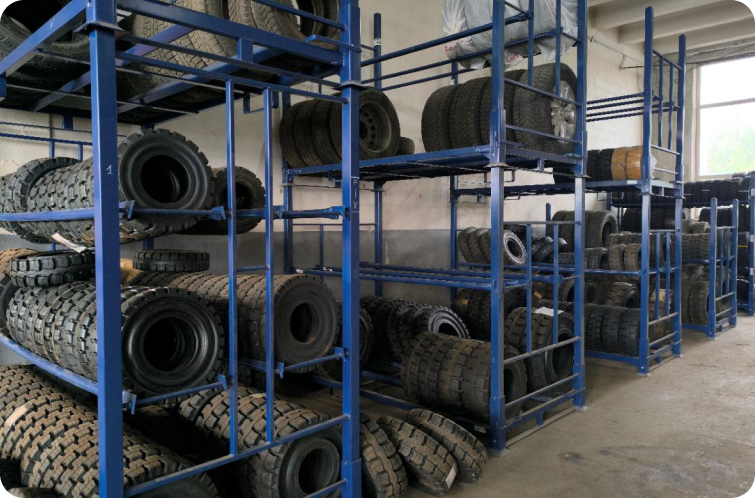
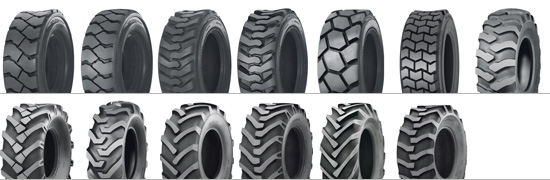
En Properly selected tires are essential for stable and safe forklift operation in any environment. We offer two main types of tires: pneumatic and solid, each with its own advantages depending on the application.
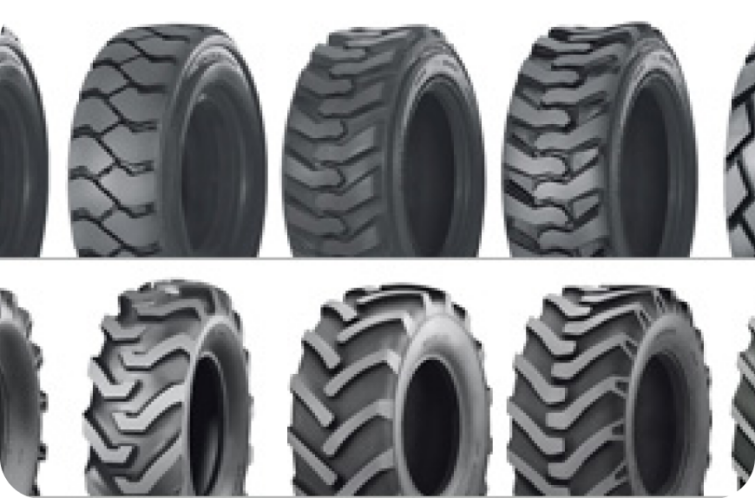
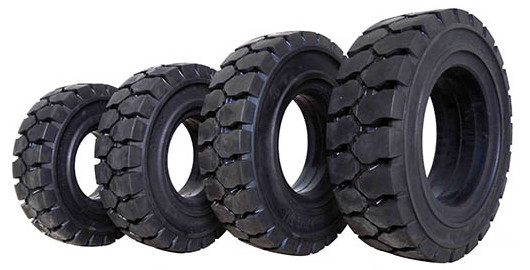
Pneumatic tires are air-filled and have a deep tread, providing good shock absorption and stability on uneven or outdoor surfaces. They are ideal for use on open sites, construction areas, in the agricultural sector, or other environments with irregular ground conditions.
Advantages:
• Better shock absorption on uneven surfaces
• Reduced load on the suspension
• Ideal for outdoor conditions
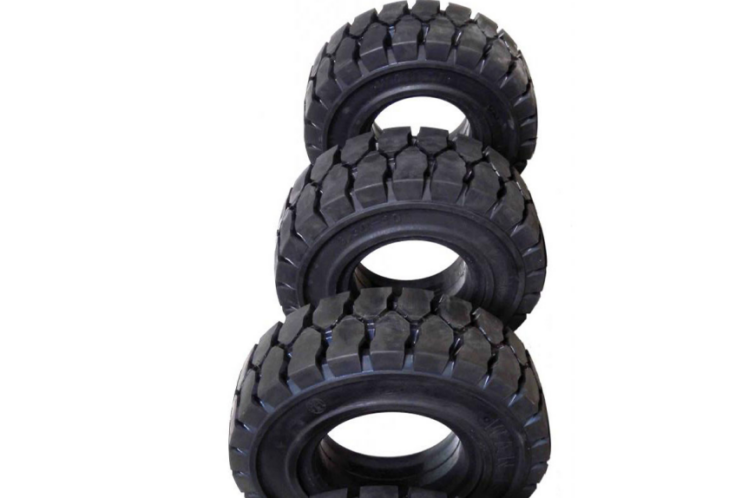
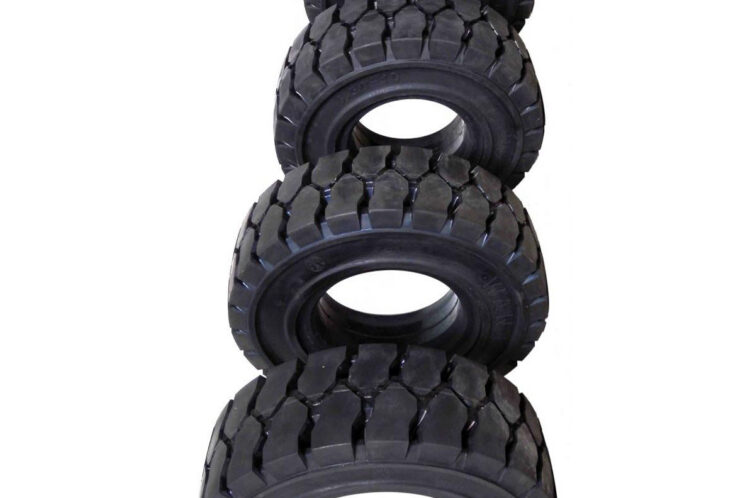
Solid tires are more wear-resistant and puncture-proof, making them optimal for indoor operations, production facilities, and warehouse complexes. We offer two versions: with a locking ring (quick-fit) for fast installation without additional rims, and standard (no locking ring) for use with classic rims. Solid tires provide high load capacity and stability under intense operation, reducing maintenance costs.
Advantages:
• Maximum wear resistance
• Puncture-proof
• Suitable for intensive indoor use
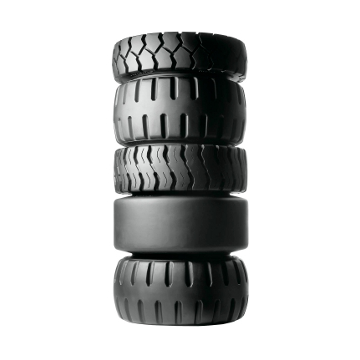
Band tires are made from synthetic materials with added natural rubber. Such a tire is a steel ring with a thin welded rubber layer, with or without tread (depending on the model), typically 30–35 mm thick. Their service life is approximately 4,000 operating hours. They offer all the advantages of solid tires but have a structural limitation — they can only be used on smooth floors. The cushioning layer is very thin, but these tires are extremely stable. Band tires are used on electric forklifts, reach trucks, and stackers operating indoors with lifting heights above 5 meters. Due to their specificity, we supply band tires on order.
• Check the pressure in pneumatic tires regularly — this extends service life and increases safety.
• Avoid overloading: excessive load can cause premature wear of any tire type.
• Inspect tires for damage and cracks — even solid tires require periodic checks.
• Store equipment in protected conditions when not in use to avoid deformation and rubber aging.